



April 26, 2026
Brothers and Sisters,
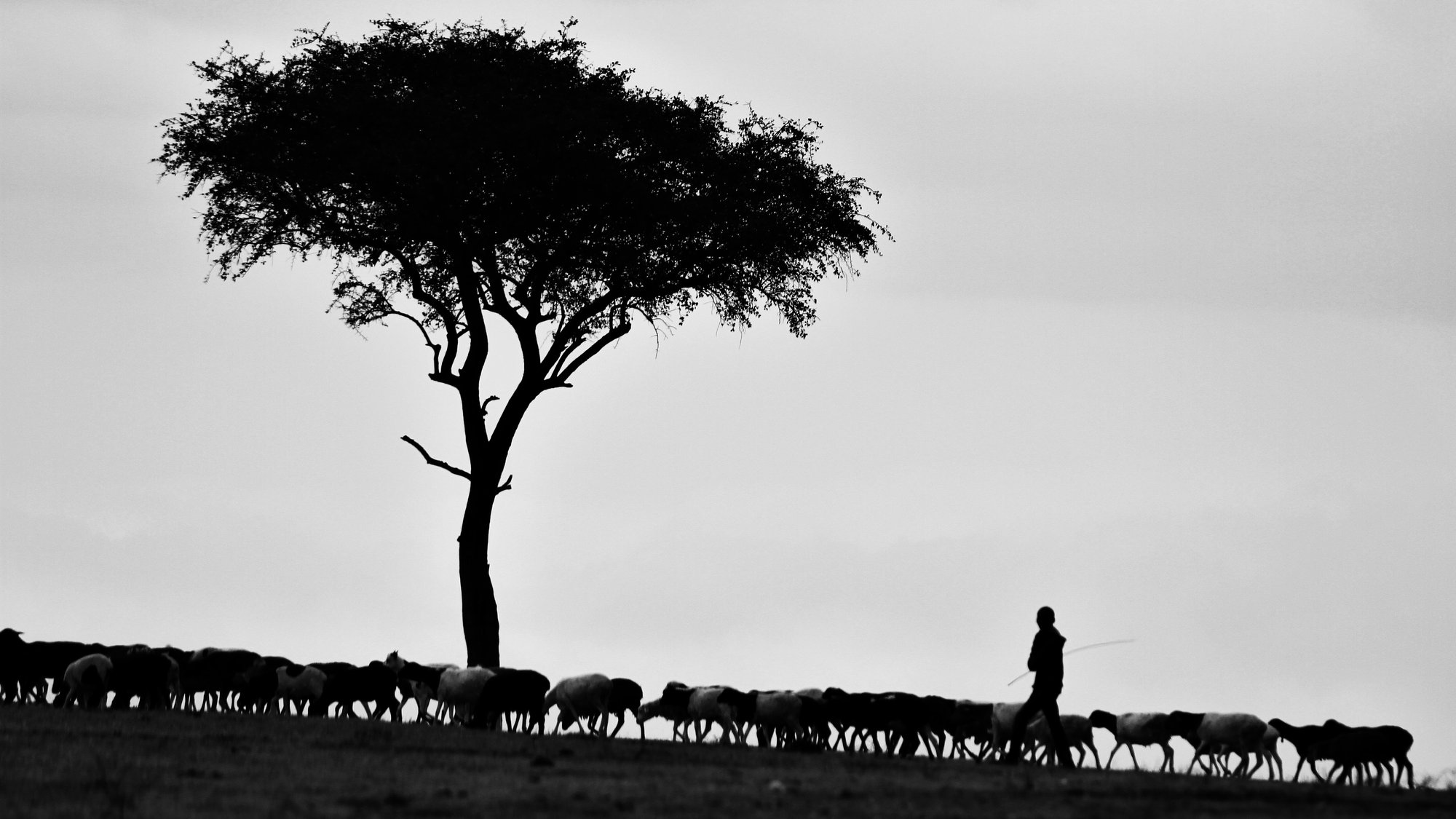
This Fourth Sunday of Easter is often referred to as, Good Shepherd Sunday, a title summarizing the Gospel for the day. We are given an opportunity to consider the way Christ calls his sheep, each by name. This call then is personal and unique, therefore, we too must learn how to respond to this personal and unique call for the Lord.
I, like many others, would argue that we do not have a vocation shortage, rather, a shortage of vocational discernment. Not enough people ask themselves what God wants them to do with their lives. Discernment—not recruitment—should be central to vocations efforts today. And personal vocation should be at the heart of it. In religious talk, the word vocation refers to three different things:
First is the common Christian vocation, which comes with baptism and is shared by all members of the Church. It consists in the commitment of faith and what follows from it: loving and serving God above all else, loving and serving neighbor as oneself, and collaborating in continuing the redemptive work of Christ, which is the mission of the Church.The second meaning is state in life. A “state” puts some flesh on the bones of the common Christian vocation. It’s a broad, overarching commitment to a particular Christian lifestyle. As such, a state in life sets someone choosing it on a path that will shape his character through the countless choices and actions required to follow it to the end. The clerical life, the consecrated life, the state of marriage, and the single lay state in the world are states in life.Third is personal vocation. It’s the unique combination of commitments, relationships, obligations, opportunities, strengths, and weaknesses—understood as representing God’s will—in and through which the common Christian vocation and a state in life are expressed by someone (priest, religious, layperson) trying to know and live the life God has in mind for him. It is the singular, unrepeatable role in his redemptive plan that God intends for each of us.“Every life is a vocation,” Pope John Paul II says. And so it is— a unique, personal vocation. Everyone needs to discern a personal vocation, for that is the way to discover the role God wishes each to play in his redemptive plan.
In his document on the laity, Christifideles Laici (On the Vocation of the Lay Faithful), which appeared in 1989, Pope John Paul says flatly that “an ever-clearer discovery of one’s vocation” is “the fundamental objective of the formation of the lay faithful” (58). He also makes the point that discovering a personal vocation is “a gradual process . . . one that happens day by day.” To be sure, there are times in everyone’s life when discernment—prayerful reflection, preferably with the guidance of a spiritual director—is especially necessary as a prelude to making a major, life-determining choice. Nevertheless, vocational discernment of a simpler sort is necessary on a day-to-day basis. It involves ongoing reflection on the current circumstances of our lives to see where the opportunities for service in the Church and in the world lie. This reflects something Cardinal Newman said: “We are not called once only, but many times; all through our life Christ is calling us . . . from grace to grace, and from holiness to holiness, while life is given us.”
Vocational discernment is not the same thing as planning one’s life. Planning is good and necessary, but it should be done within the framework of the vocation one has discerned, not in place of discernment. Typically, people who plan but don’t discern organize their lives in light of goals that promise personal satisfaction. This may even be the satisfaction that comes from generous, altruistic deeds. But even where that’s so, the difference between discerning and planning stands. The central issue for people who plan is: “What will make me happy?
How can I get the most satisfaction for myself?” For those who discern, the fundamental question is: “What does God want from me?” Paradoxically, of course, the disinterested approach turns out to be more satisfying— and more exciting. Fr. Walter Ciszek, S.J., the Polish-American priest who spent many years in prisons and prison camps in the Soviet Union during and after World War II, caught the essence of it in these words:
“God has a special purpose, a special love, a special providence for all those he has created. God cares for each of us individually, watches over us, provides for us. The circumstances of each day of our lives, of every moment of every day, are provided for us by him. . . . [This] means . . . that every moment of our life has a purpose, that every action of ours, no matter how dull or routine or trivial it may seem in itself, has a dignity and worth beyond human understanding. No man’s life is insignificant in God’s sight.”
We find our personal vocations, and we accept or reject them, live them out or fail, in “the circumstances of each day of our lives, of every moment of every day.” Not so coincidentally, finding God’s will for oneself, accepting it, and living it out are what it means to be a saint.
Let us pray for all our young (and young-ish) parishioners, that the voice of Shepherd may speak louder than the noise of our busy lives.